
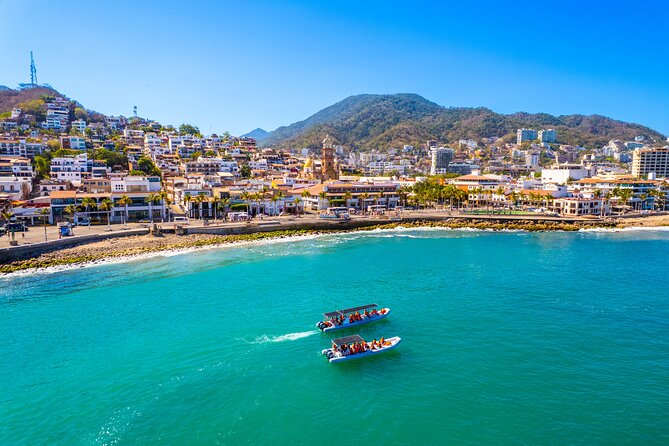
Where the sierra runs into the bay.
Panga rides to villages with no road in, taco walks through the Zona Romántica, quads up the riverbed to the Jorullo bridge. What each one is actually like, what it costs, and where to book it.
Boats, quads and taco walks.
First trip or fifth, these seven fill the week: the catamaran down to Majahuitas, the ATV run over the Jorullo bridge, an evening crawl through the taco stands of Pitillal, and the whale boats that leave from the marina all winter.
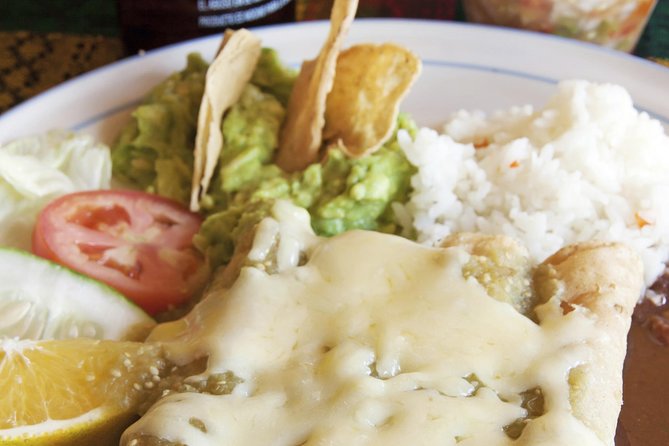
Downtown Vallarta Food Tour with Vallarta Food Tours
Small-group morning food walk in Puerto Vallarta with 8 tastings and local history across iconic downtown stops for a lunch-sized meal.
From $59 per person
Read the review → ★ 5.0Fills up earlyExtreme Adventure, Wildest Bridge, ATV & ZiplinesFrom $1293,179 reviews
 ★ 5.0Bay classicMega Yacht ALL INCLUSIVE Yelapa Waterfall & Snorkeling AdventureFrom $1172,515 reviews
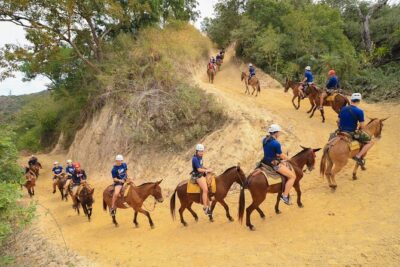 ★ 5.0Worth the early startOutdoor Ziplining, Waterfalls & Speed boat in Puerto VallartaFrom $1291,796 reviews
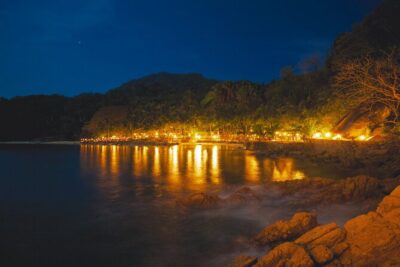 ★ 4.5Small groupsRhythms of the night, Sunset Cruise, Candlelit Dinner & Alma Show1,667 reviews
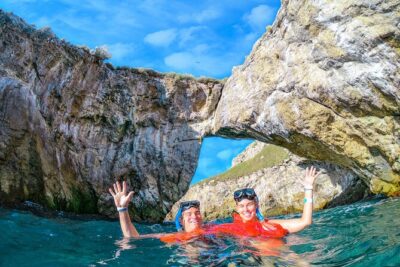 ★ 4.5Half a dayIslas Marietas & BBQ lunch at MajahuitasFrom $991,130 reviews
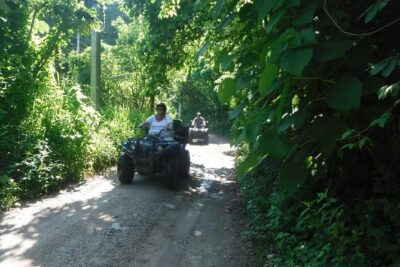 ★ 5.0Family pickPrivate Tour: Puerto Vallarta ATV AdventureFrom $1181,100 reviews
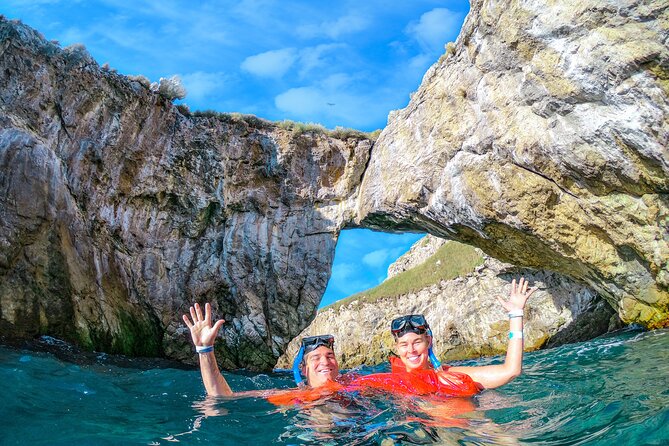
The best of it needs a boat.
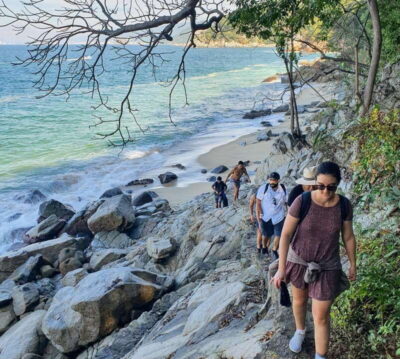
Yelapa has no road in. Majahuitas has no road either. Colomitos is a jungle path from Boca de Tomatlán or a fifteen-minute panga. The Marietas need a permit and a licensed guide. One long day on the water is what most people end up planning the rest of the week around.
Near shore or all the way out?
Every visitor ends up on the water. The only real choice is how far out you go and how long you stay. Three ways to spend it, and everything behind each one is priced and rated.
Permit capped
The Marietas morning
7 hours (approx.) · from $99 · 1,130 reviews
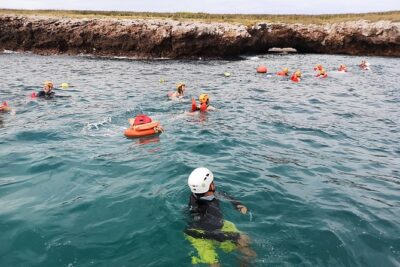
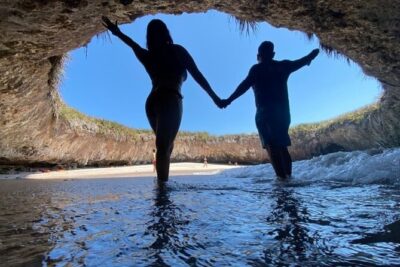
Ninety minutes north across the bay, then a swim through the tunnel into the sunken beach if the day’s permit goes your way. Blue-footed boobies overhead, rays under the hull on the way back. Visitor numbers are capped by the national park, so book early and take the first departure you can face.
See the Marietas trips →
All inclusive
The Yelapa run
6 hours (approx.) · from $117 · 2,515 reviews
A big catamaran out of the marina, open bar from the moment the lines drop, a short walk behind the village to the waterfall and lunch on a beach you reached by sea. Long, loud, and no decisions required. Back at the pier around six.
See the Yelapa days →
 Short hop south
The Los Arcos half day
3 hours 30 minutes (approx.) · from $48 · 1,176 reviews
The granite arches sit twenty minutes south of the Malecón. Snorkel the tunnels, paddle a kayak into the sea caves, and still make a late lunch in the Zona Romántica. Cheapest way onto the water and still the best fish.
See the Los Arcos trips →
Short hop south
The Los Arcos half day
3 hours 30 minutes (approx.) · from $48 · 1,176 reviews
The granite arches sit twenty minutes south of the Malecón. Snorkel the tunnels, paddle a kayak into the sea caves, and still make a late lunch in the Zona Romántica. Cheapest way onto the water and still the best fish.
See the Los Arcos trips →
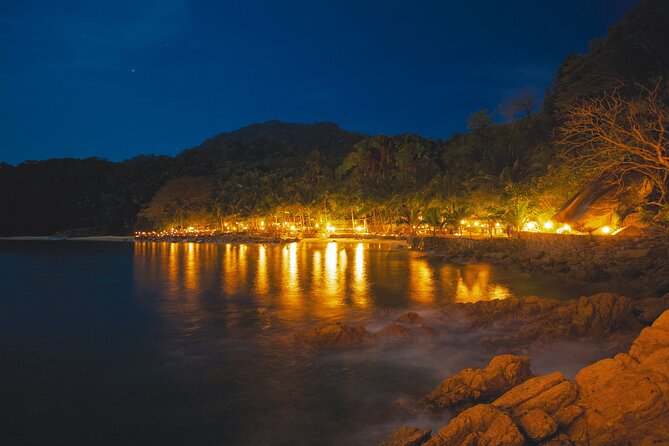
The bay lights up late.
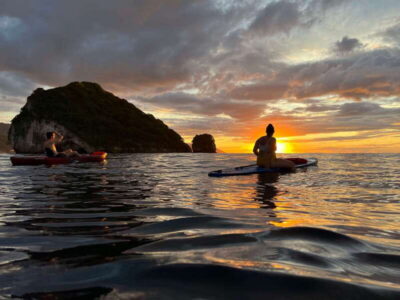
On a moonless night the water off Los Arcos glows blue where your paddle breaks it. There is a dinner theatre on a beach with no road, reached by boat and lit by candles. And the taco stands in Pitillal do not really get going until ten.
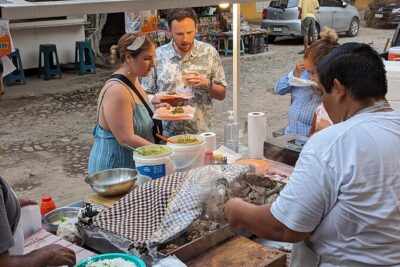
Nobody sits down for dinner here.
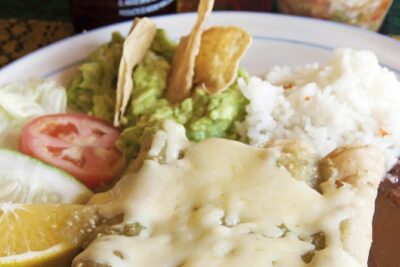
Birria on a corner in the Zona Romántica, marlin tacos in Pitillal, raicilla poured from a bottle with no label. The city eats late and on its feet, and these walks hand you the addresses you would never find alone.

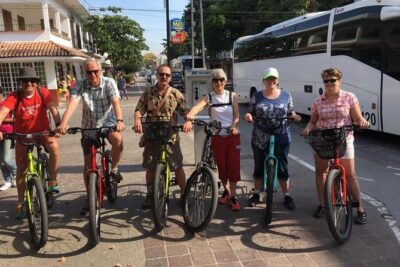
Mud, cable and open throttle.
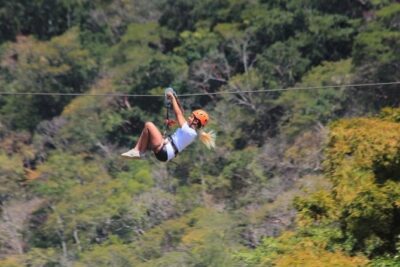
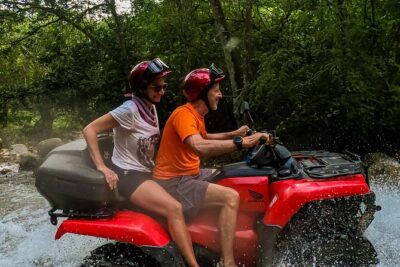
The Sierra Madre begins where the last street ends. Quads through river crossings above El Jorullo, canopy cables strung across the Río Cuale, and a suspension bridge you walk before you ride back down it.
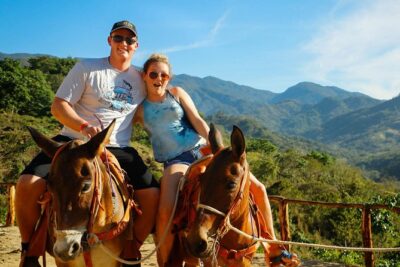
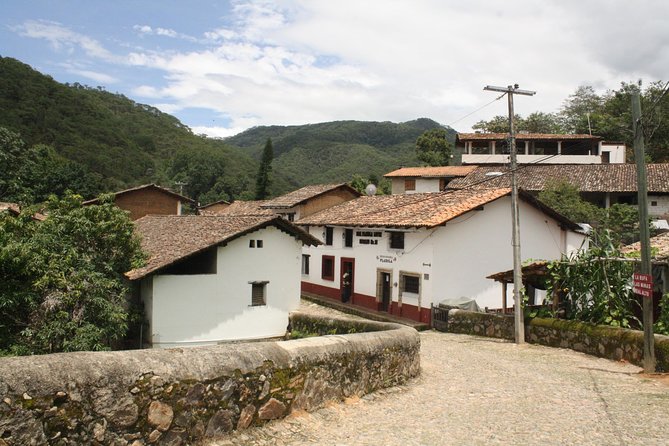
Up where the coffee grows.
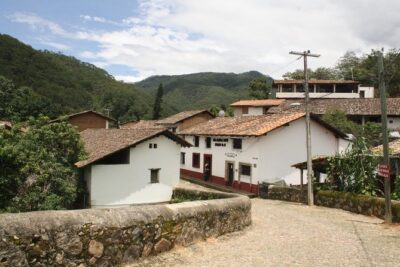
San Sebastián del Oeste sits at fifteen hundred metres, ninety minutes and several centuries from the beach. Whitewashed walls, a working coffee finca, cobbles laid for mule trains carrying ore down to the coast. Take a jacket: it is a good ten degrees cooler up there.
The bay is not one place.
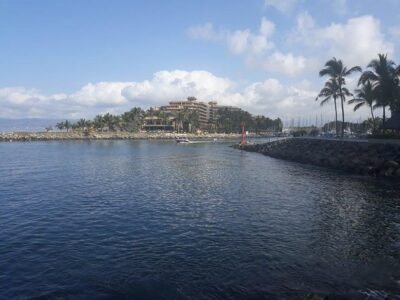
The coast changes every twenty minutes. Town for the cobbles and the Malecón. Mismaloya for the arches offshore. Yelapa for the waterfall behind the village. Nuevo Vallarta for flat water and the marina boats.
Book by activity, not by beach.
One coastline, twelve different mornings. Choose by what you feel like doing rather than where you feel like going, and start at the top of whichever page opens.


Ninety minutes gets you a long way.
North over the state line to the surf towns of Nayarit, south by boat to villages the road never reached, and up into coffee country where the air finally cools. Most of these have you back for dinner.
Town, then water, then mountain.
Nobody covers the whole bay in one trip, and the sequence matters more than the itinerary. Find your feet on the cobbles, spend the middle day at sea, and save the sierra for after the sunburn has settled.
 Day 1
Cobbles and the Malecón
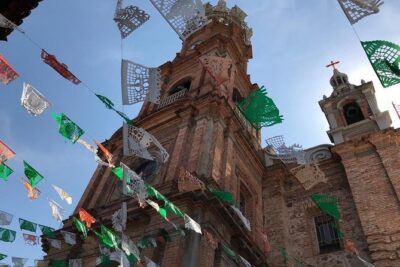
Cobbles from the Cuale bridge up to the crown on the Guadalupe church, the Malecón sculptures at golden hour, then tacos in the Zona Romántica while the flight is still wearing off.
Old town tours →
Day 1
Cobbles and the Malecón
Cobbles from the Cuale bridge up to the crown on the Guadalupe church, the Malecón sculptures at golden hour, then tacos in the Zona Romántica while the flight is still wearing off.
Old town tours →
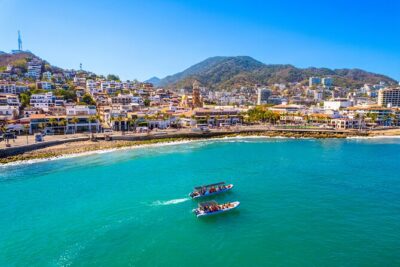 Day 2
Out past Los Arcos
Early boat south past Los Arcos to Yelapa or Majahuitas. Swim, eat, sleep on the deck coming home. Take twice the sunscreen you think you need and a shirt for the crossing.
Boat trips →
Day 3
Head for the sierra
Quads up the riverbed to the Jorullo bridge, or the slow version of the same country: coffee in San Sebastián and a waterfall swim on the way back down.
Sierra runs →
Day 2
Out past Los Arcos
Early boat south past Los Arcos to Yelapa or Majahuitas. Swim, eat, sleep on the deck coming home. Take twice the sunscreen you think you need and a shirt for the crossing.
Boat trips →
Day 3
Head for the sierra
Quads up the riverbed to the Jorullo bridge, or the slow version of the same country: coffee in San Sebastián and a waterfall swim on the way back down.
Sierra runs →
Latest Puerto Vallarta tour reviews.
 ★ 4.5Puerto Vallarta Airport (PVR) to Punta de Mita hotels – Private Arrival TransferFrom $1403 reviews
 ★ 4.5Private Transfer from Puerto Vallarta Airport (PVR) for 4-7 people to NayaritFrom $1023 reviews
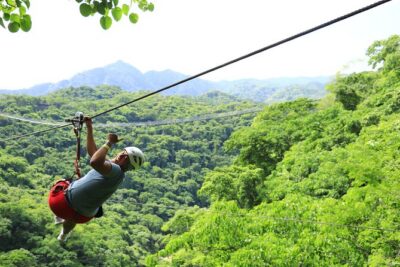 ★ 5.0Combo ATV Jorullo Bridge + zip lines + mule rideFrom $1873 reviews
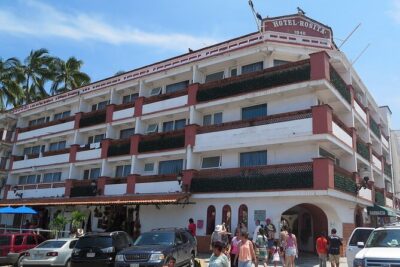 ★ 5.0Puerto Vallarta Historical El Centro: A Self-Guided Audio TourFrom $93 reviews
 ★ 5.0Puerto Vallarta Airport (PVR) to Sayulita hotels – Private Roundtrip TransferFrom $3123 reviews
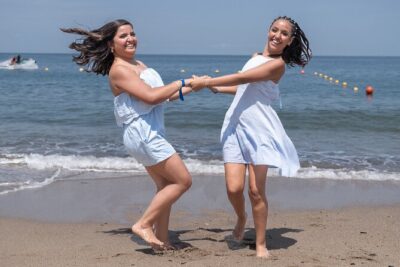 ★ 5.0Puerto Vallarta Photoshoot with Professional PhotographerFrom $2143 reviews
 ★ 5.0Surf Lesson for Beginners in Sayulita & Punta de Mita3 reviews
 ★ 5.0Ecocultural Jungle Hike & Secret Beach ExperienceFrom $253 reviews